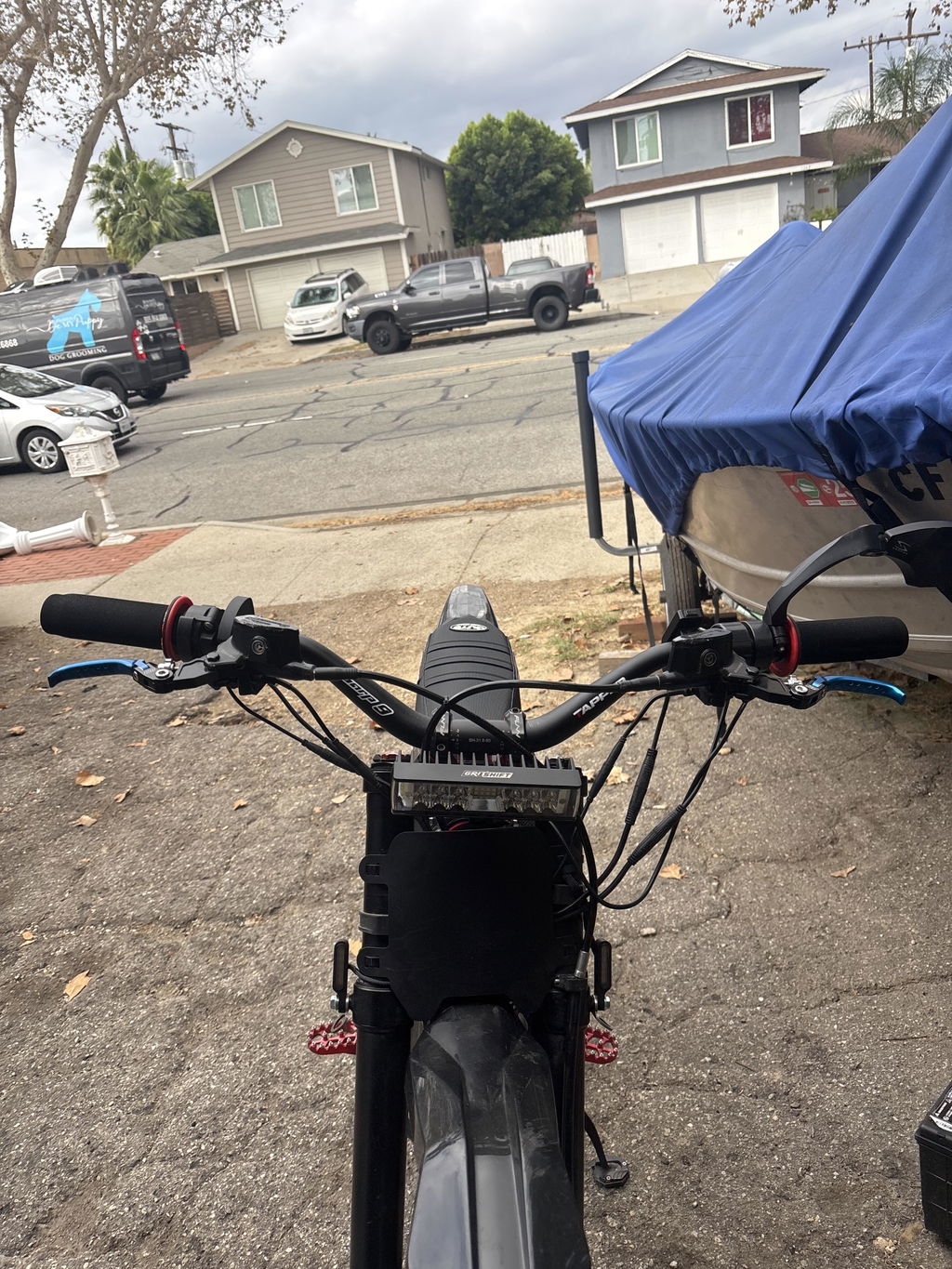

Cold doesn't break a lithium battery on a single ride, but it changes how the pack behaves. You get less range, the bike feels softer, and charging needs more care. This guide is about getting through cold rides: what's going on inside the pack, how to ride and charge around it, and the mistakes that cause real damage. For parking the bike for the whole season, see our winterizing and storage guide.
Why your battery feels weaker in the cold
Lithium-ion cells rely on chemical reactions that slow down as temperature drops. Internal resistance goes up, so the pack can't deliver as much current and voltage sags under load. In practice, you'll notice:
- Less range. The cold pack delivers less usable energy, so you'll get fewer miles than in summer on the same charge. How much less depends on the temperature, your pack and how hard you ride.
- Less punch. Voltage sag can make the bike feel down on power, and the battery gauge may drop faster than normal.
- Power that comes back as it warms. A lot of this loss is temporary. As the pack warms up from use, or once you bring it inside, performance recovers.
Before a cold ride
- Store the battery warm. Keep a removable pack indoors overnight and install it right before you ride. A pack that starts warm keeps more of its performance for longer.
- Start with a full charge from a warm charge (see below). You want all the capacity you can get when the cold is taking some of it away.
- Check the connections. Look for corrosion or moisture at the battery connector and make sure the pack is seated and latched.
- Plan a shorter loop than you'd ride in summer, or one that brings you back near home. Don't plan a cold ride around your summer range.
On the ride
- Use a lower power mode. Eco or mid modes draw less current, which means less voltage sag and more miles.
- Be smooth. Constant full-throttle bursts drain a cold pack fastest. Steady throttle gets you farther.
- Don't run it flat. Turn for home with charge left. A cold, nearly empty pack can hit the low-voltage cutoff sooner than you expect.
- Insulation is optional. Some riders use an insulating wrap or cover on the battery area in very cold weather. If you try one, make sure it doesn't trap water or interfere with the battery latch or lid.
Charging in cold weather: the rule that matters most
Never charge a lithium battery below freezing. Charging a frozen pack can cause permanent cell damage (lithium plating), even if the battery seems fine afterward. Sur-Ron's Ultra Bee owner's manual, for example, says not to charge the battery below 0°C (32°F). Check your own manual for its limits.
- After a cold ride, bring the battery indoors and let it warm to room temperature before plugging it in. Give it time — a big pack takes a while to warm through.
- Charge indoors, somewhere dry, away from anything flammable, and not in a freezing garage or shed.
- Use the charger made for your bike. Some batteries' warranties exclude damage from using the wrong charger. E-Ride Pro owners can get a replacement with the E-Ride Pro 72V 10A Charger.
- Expect charging to be slower, or to stop, if the pack is still cold. Many battery management systems limit charging at low temperatures to protect the cells.
Signs something's wrong
- Range that stays low even after the pack warms up in mild weather
- Sudden shutoffs under load at a high indicated charge
- A battery that won't take a charge after it's warmed up
- Swelling, cracks, a burning smell or corrosion at the terminals
If you see swelling, damage or a burning smell, stop using the battery and contact the manufacturer or our team. Don't try to charge a damaged pack.
If you're done riding for a while
Long-term storage has its own rules for charge level and temperature, and they're different for each bike. As one example, Sur-Ron's Ultra Bee manual calls for storing the pack at 60–80% charge in 10–30°C (50–86°F), and checking it monthly. Follow your own bike's manual. Our winterizing guide walks through the full storage process.
FAQ
Will cold weather permanently damage my battery? Riding in the cold mostly causes a temporary loss of range. The real damage comes from charging below freezing or storing the pack in deep cold for long periods.
How long should I wait before charging after a cold ride? Until the pack is back at room temperature. That's usually longer than you'd think for a large battery.
Can I leave the battery in the bike in an unheated garage? For a removable pack, it's better to bring it inside. Never charge it out there in freezing temperatures.
Questions about your battery? Email support@tbelectricmoto.com, and browse batteries if you need a spare or replacement.